Technologies
Online Stabilization
Often, in addition to dewatering wastewater or sludge, there is a need to modify the strength properties of the mass or, for example, trigger a chemical reaction to alter metallic solubility. For this purpose, we have developed and patented an online stabilization method together with a partner.
In this method, everything happens in the pipe in real time. For example, contaminated sediment is suction dredged from the bottom of a harbor basin, or sediment from a mining wastewater pond is suction dredged from the bottom of the pond into a Geotube.
The sludge travels in a pipe between the starting point and the tube. Normally, the use of flocculants is sufficient, allowing the sludge to be dewatered and the harmful substances to be retained inside the tube.
In some cases, soluble metals are also present in the water, or the dewatered sediment itself needs to be stabilized to reduce the solubility of harmful substances and to improve the sediment’s landfill eligibility or suitability for utilization. In some cases, the strength properties of the sediment must be improved. We can address these factors in the pipe using our patented method, without separate work phases—imagine the savings!
We efficiently treat watery sediments, sludge, liquid waste, tailings, and mining waste. We separate solids from liquids. Our clients include the mining industry, waste management, paper and pulp industry, steel industry, fertilizer industry, as well as municipalities, cities, and ports in Finland and Sweden.
The treatment process includes the following phases:
1
Contact and reviewing the initial data together with the client
2
Assessment, sampling, laboratory tests, and design calculations
3
Expert services during the permitting and planning phases
4
Dredging and delivery of sludge treatment technology
5
Project monitoring and reporting
Benefits of Sludge Treatment:
- User experience: over 20 years of experience in Finland and Sweden
- Watery, liquid sludge turns into solid: utilization or final disposal becomes easier, loading and transport are more economical
- Dry stacking: dry stacking of tailings, takes up less space and water does not surge
- Utilization: Geotube elements can be used, for example, to build a dam or an embankment
- Simple installation and operation: no mechanical parts or complex systems
- The amount and volume of sludge is significantly reduced: up to 90% of the original volume
- Large or small capacity: up to 3000 m³/h treatment capacity, which corresponds to the largest suction dredger, or alternatively available in a size of 0.1 m³
- Purifies water: effectively retains solids >99% as well as harmful substances, including heavy metals, also soluble ones >99%
- No odor, no noise, no maintenance: Ideal for urban environments
- Versatile installation and mobile: can be stacked on top of each other or installed on a hooklift container
References implemented based on our design and technology
-
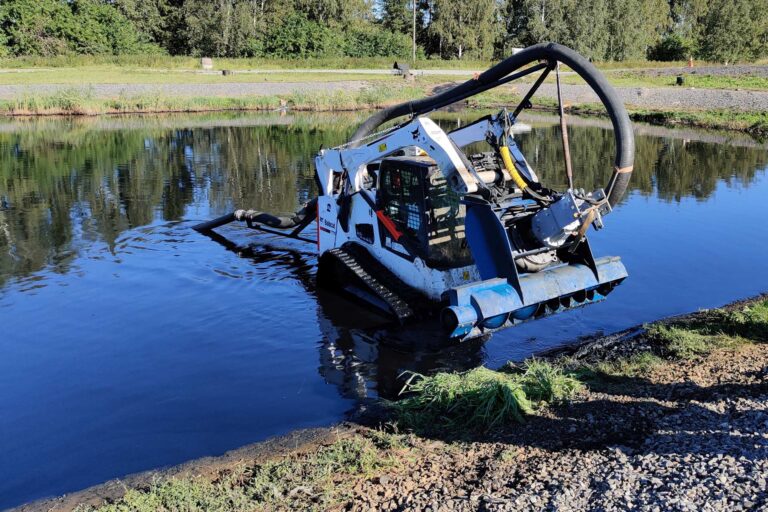
Water treatment plant in City of Turku
Hydraulic dredging of sediments was required from an inlet settling basin at water treatment plant. Over time the basin had filled with sediments and needed a filtering.
-
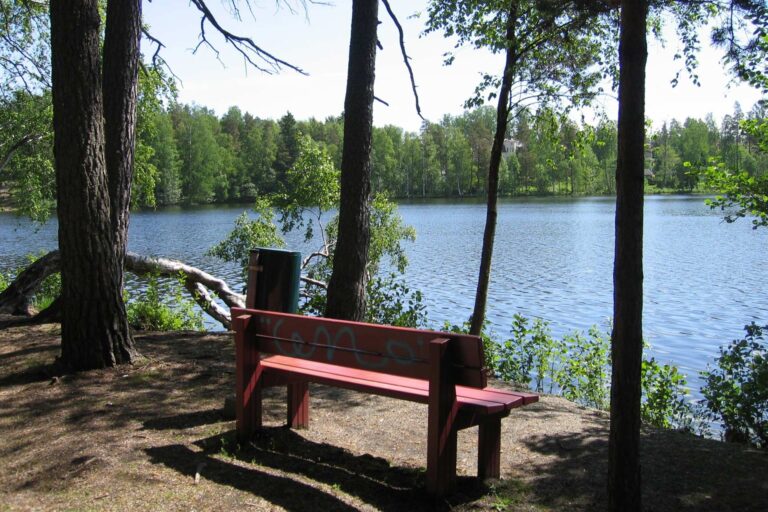
Gallsträsk lake renewal in Kauniainen
Gallträsk Lake in Kauniainen recreational area was in critical condition. The quality of water has deteriorated into almost hazardous level and making the area’s only lake nearly un usable for recreational outdoor activities.
-
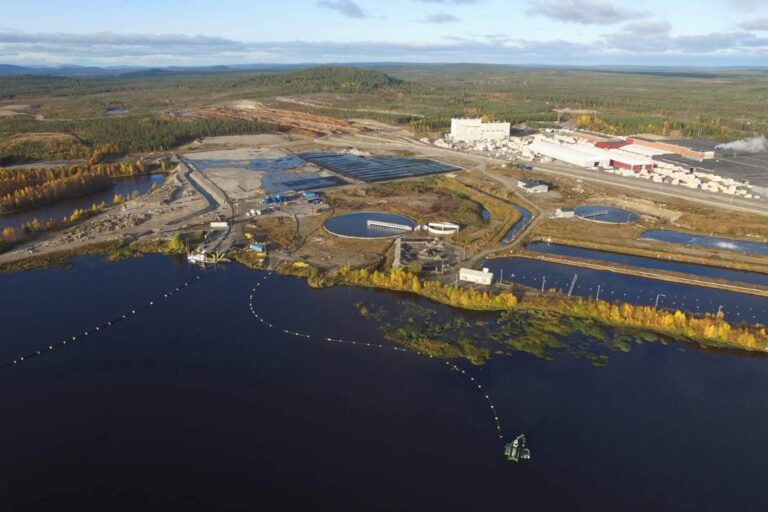
Rescuing Lapland’s bird paradise in Kemijärvi
We helped to clean a former paper mill area in Kemijärvi. Area is commonly known as a local bird habitat. Using a suction dredge method more than 300 000 cubics of contaminated soil will be processed and removed together with Vesirakennus Ojanen Oy.
Contact us