Solutions
GEOTUBE®
Reducing water content, retaining solids and harmful substances, and minimizing treatment costs.
The treatment and dewatering of sludge, tailings, and other liquid waste streams is a continuous operational challenge. Traditional geotextile tubes often remain too moist, while mechanical systems are capital-intensive, prone to failure, and lack sufficient capacity. The result is a wetter mass, meaning more material to be disposed of and transported, a larger space requirement on the treatment site, and higher material consumption.
GEOTUBE® solves these challenges by combining simple, passive dewatering with proven performance in retaining solids and harmful substances, accelerating drying, and reducing labor requirements. GEOTUBE units are capable of reducing volume by up to 90 percent, enabling efficient water release and mass consolidation—passively—without additional labor or space requirements.
Dewatering and Consolidation in a Single Step
GEOTUBE units are manufactured from high-strength geotextile designed to retain solids and harmful substances while allowing water to escape. Sludge is pumped or dredged into the tube, and polymers are added to bind fine particles and accelerate water release. The filtrate drains through the fabric, while solids and harmful substances are retained inside the tube. We have also achieved excellent results with soluble metals and nutrients using the right additives. Over time, consolidation and drying continue through capillary action and consolidation.
GEOTUBE units can be customized according to available space and stacked to optimize footprint. Once dewatering is complete, the solids can be removed for reuse or disposal, or the tube can be sealed in place. Individual sizes range from 0.3 m³ up to 2,000 m³, and project volumes can reach millions of cubic meters.
We efficiently treat watery sediments, sludge, liquid waste, tailings, and mining waste. We separate solids from liquids. Our clients include the mining industry, waste management, paper and pulp industry, steel industry, fertilizer industry, as well as municipalities, cities, and ports in Finland and Sweden.
Wastewater ponds, tailings, mine ponds and scale pits, sedimentation and stormwater ponds, areas in front of dams, lakes, and rivers or similar water bodies will eventually fill up with sludge. Suction dredging or pumping is best suited for removing watery sludge. Often, the sludge is highly watery and also contains harmful substances. With our solutions, watery sludge can be processed into a solid form, and its volume is significantly reduced. The drainage water removed during the treatment can often be treated so that it can be discharged into the terrain or back into the process.
We help design and select the best method for sludge removal and treatment. We model the solution using site-specific samples in our laboratory to choose the best option. In sludge treatment, we use precipitants or other additives to help retain heavy metals or other harmful substances.
Sludge Treatment as a Service
The treatment process includes the following phases:
1
Contact and reviewing the initial data together with the client
2
Assessment, sampling, laboratory tests, and design calculations
3
Expert services during the permitting and planning phases
4
Dredging and delivery of sludge treatment technology
5
Project monitoring and reporting
The suction dredging contractor is always tendered on a project-by-project basis.
Benefits of Sludge Treatment:
- User experience: over 20 years of experience in Finland and Sweden
- Watery, liquid sludge turns into solid: utilization or final disposal becomes easier, loading and transport are more economical
- Dry stacking: dry stacking of tailings, takes up less space and water does not surge
- Utilization: Geotube elements can be used, for example, to build a dam or an embankment
- Simple installation and operation: no mechanical parts or complex systems
- The amount and volume of sludge is significantly reduced: up to 90% of the original volume
- Large or small capacity: up to 3000 m³/h treatment capacity, which corresponds to the largest suction dredger, or alternatively available in a size of 0.1 m³
- Geotubes according to the project size, from a cubic meter to hundreds of thousands of cubic meters, with experience from real projects as well
- Purifies water: effectively retains solids as well as harmful substances, including heavy metals, also soluble metals
- No odor, no noise, no maintenance: Ideal for urban environments
- Versatile installation and mobile: can be stacked on top of each other or installed on a hooklift container
References implemented based on our design and technology
-
Water treatment plant in City of Turku
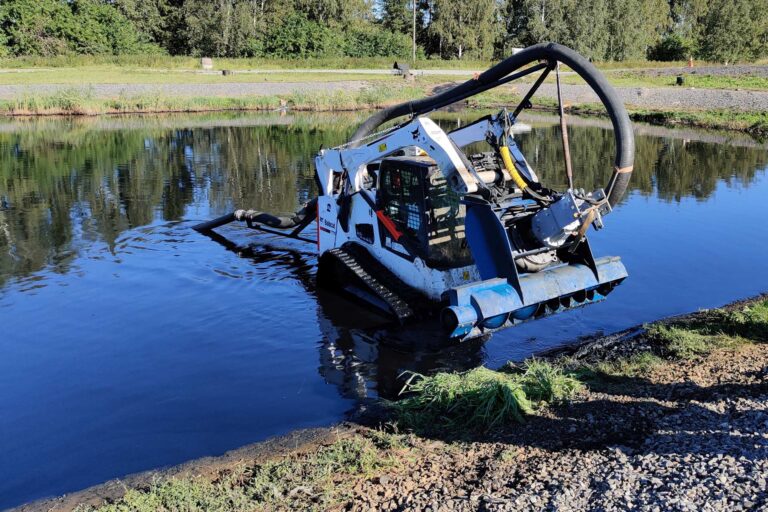
Hydraulic dredging of sediments was required from an inlet settling basin at water treatment plant. Over time the basin had filled with sediments and needed a filtering.
-
Gallsträsk lake renewal in Kauniainen
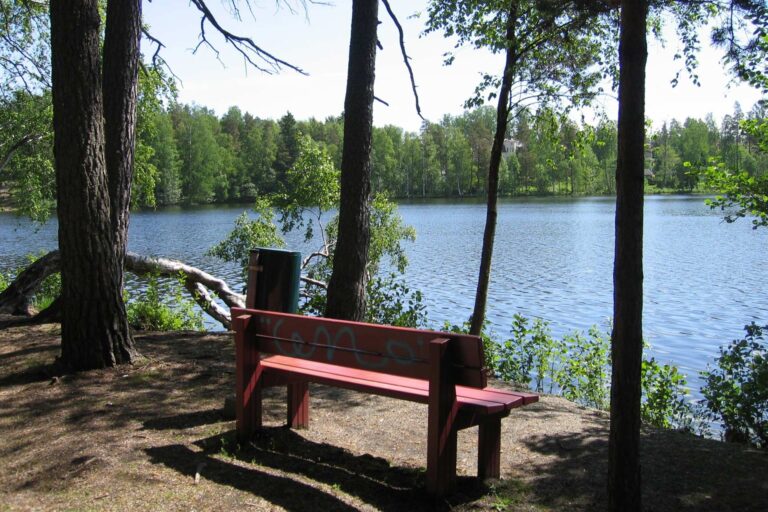
Gallträsk Lake in Kauniainen recreational area was in critical condition. The quality of water has deteriorated into almost hazardous level and making the area’s only lake nearly un usable for recreational outdoor activities.
-
Rescuing Lapland’s bird paradise in Kemijärvi
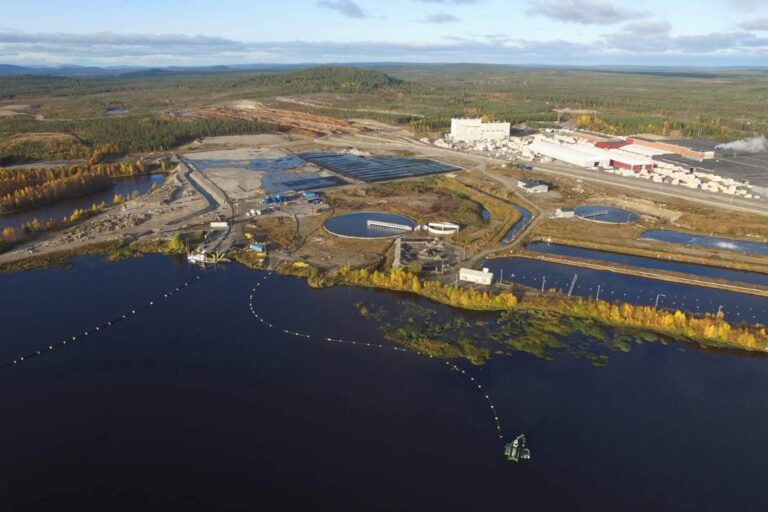
We helped to clean a former paper mill area in Kemijärvi. Area is commonly known as a local bird habitat. Using a suction dredge method more than 300 000 cubics of contaminated soil will be processed and removed together with Vesirakennus Ojanen Oy.
Contact us